How evolving architectural specifications and heightened security requirements are transforming the international custom entrance market.
Modern luxury villa projects demand more than visual aesthetics. High-end custom doors must integrate RC3 and RC4 certified burglary protection, bulletproof cladding options, and impact ratings capable of resisting severe weather and manual intrusion attempt vectors. B2B projects globally prioritize structural integrity, thermal decoupling profiles, and high-performance continuous sealing systems.
Architectural designs are moving away from traditional mechanical locking systems. Modern luxury entrances must seamlessly interface with smart home automation networks. Advanced villas rely on invisible integrated motorized multipoint locks, facial recognition terminals, structured wiring pass-throughs, and biometric sensors that match the aesthetic veneer of the door face.
With tightening passive house standards in Europe and energy conservation acts globally, entryways require thermal insulation. The use of thermal break profiles, triple-pane insulated safety glass inserts, and polyurethane or rockwool core insulation helps developments achieve low U-values (below 0.8 W/m²K), minimizing HVAC energy loss.
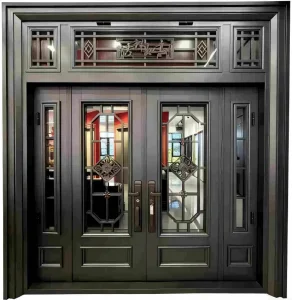
Zhejiang Larsom Door Co., Ltd. is a leading manufacturer specializing in the research, development, engineering, and global export of high-performance security doors, armored doors, hybrid steel-wood structural entryways, and custom-designed architectural door systems. Driven by architectural trends and advanced materials science, we specialize in high-end solutions for luxury residences, commercial complexes, and modern apartment developments.
Operating a modernized manufacturing facility spanning over 16,000 square meters and staffed by more than 160 skilled technicians, Larsom has optimized our production line to output a daily capacity exceeding 200 sets of custom architectural doors. This structural capacity ensures we remain highly responsive to high-volume development deadlines and detailed bespoke requirements alike.
Larsom Door invests heavily in automated production machinery, featuring precision CNC laser cutting units, heavy-duty CNC bending machines, automated structural welding stations, multi-die turret punches, precision edge sanders, and an integrated automated powder coating division. This high level of mechanization yields reliable dimensional tolerances, structural strength, and uniform surface finishes across every production run.
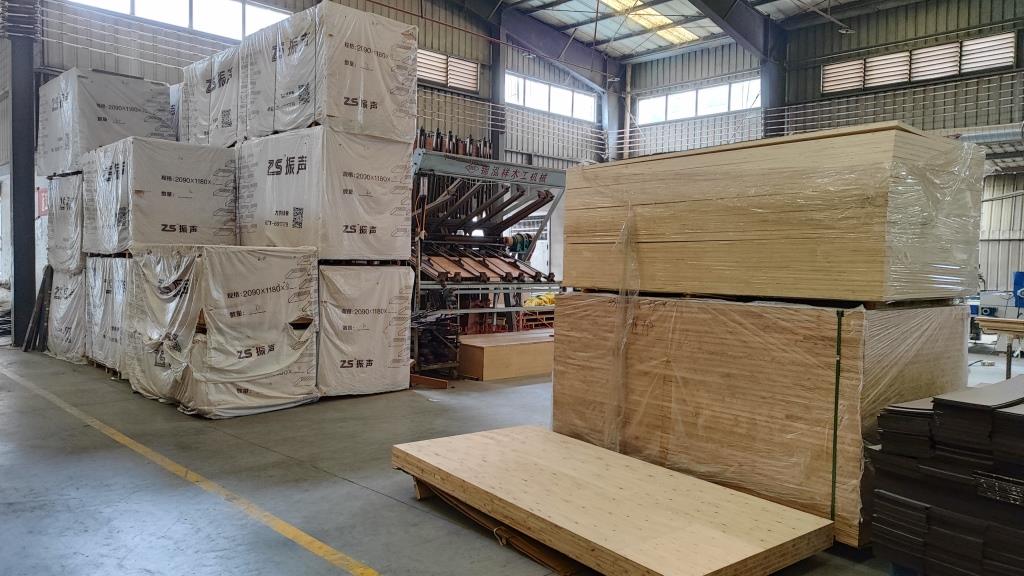
Our standard workflow leverages automated CNC milling, advanced metallurgical presses, and structural finishing to guarantee strict architectural tolerances.
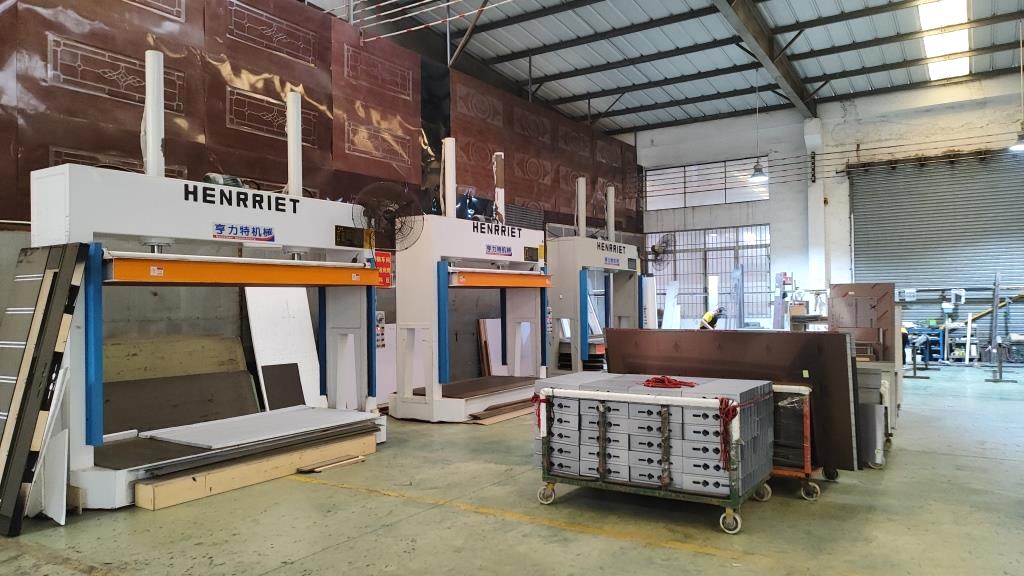
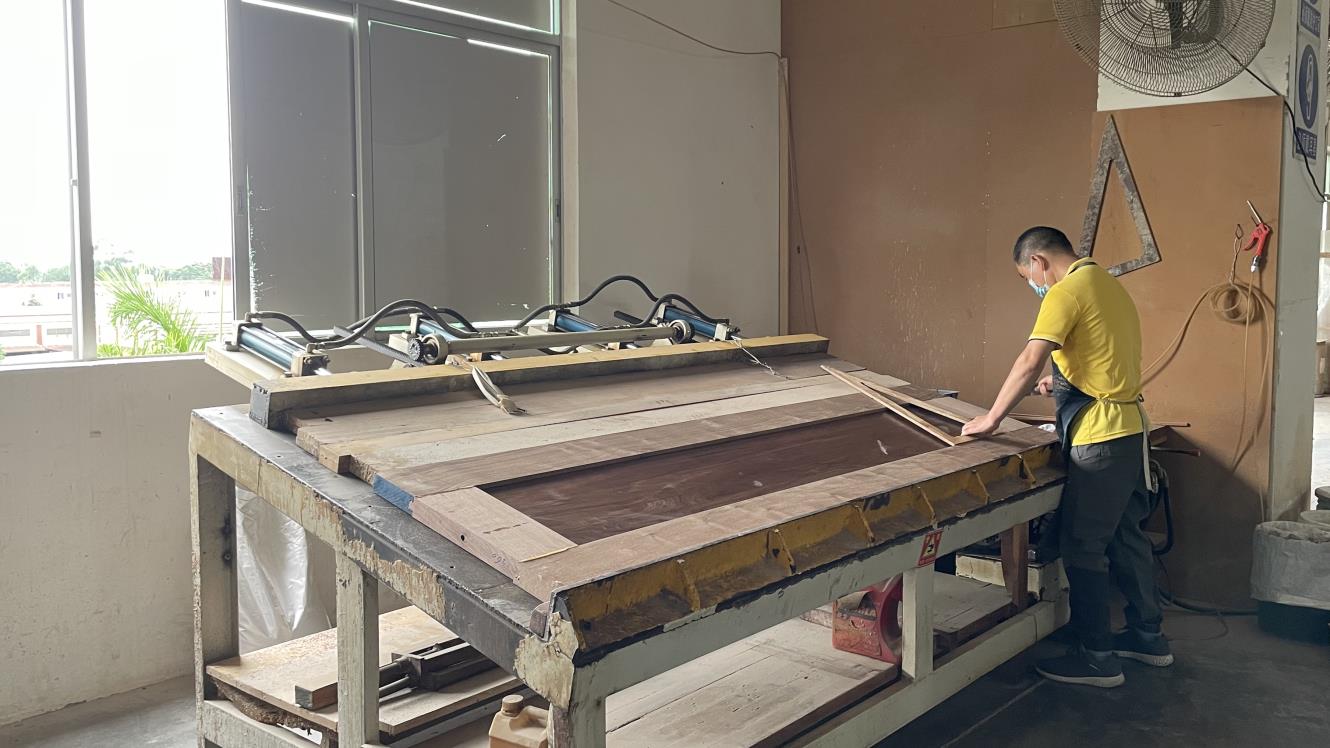
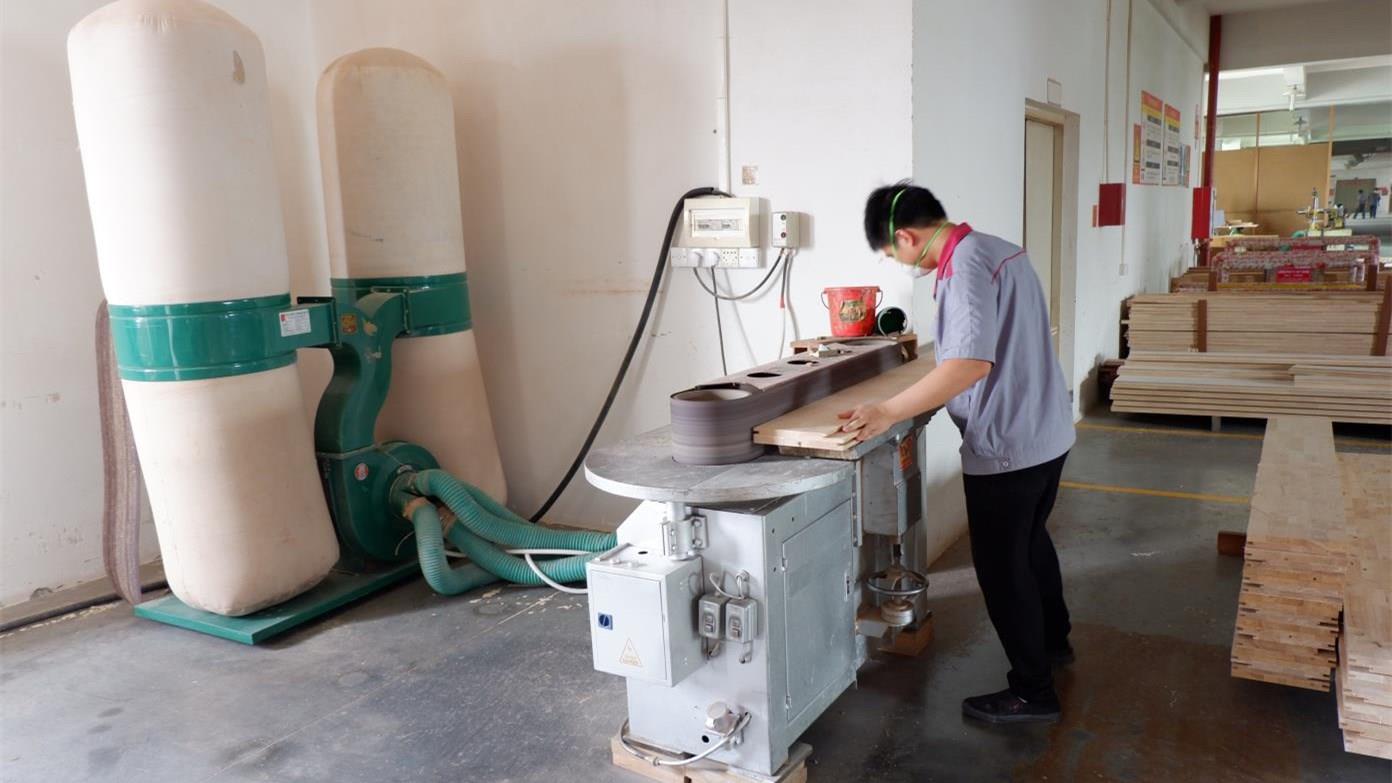
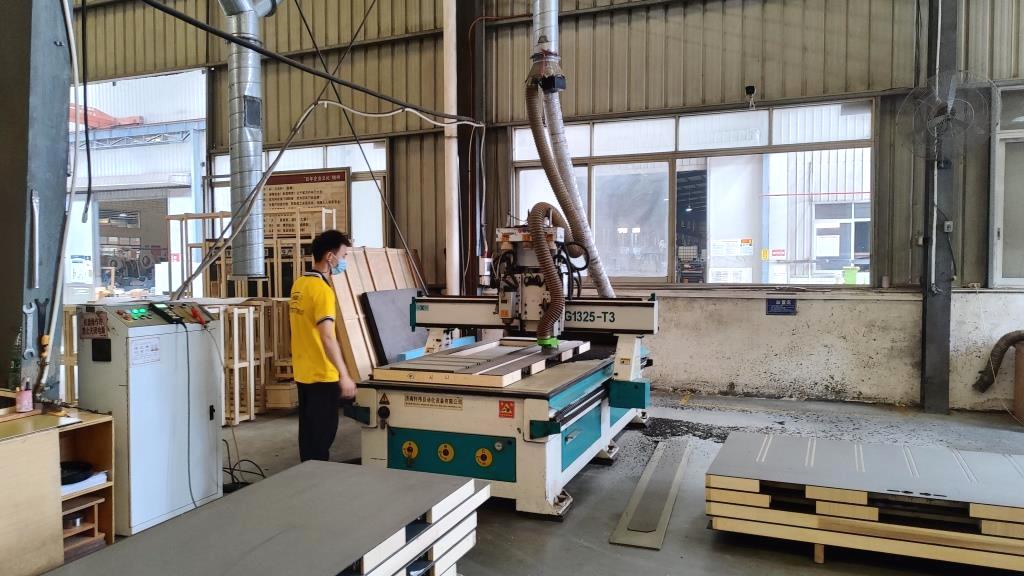
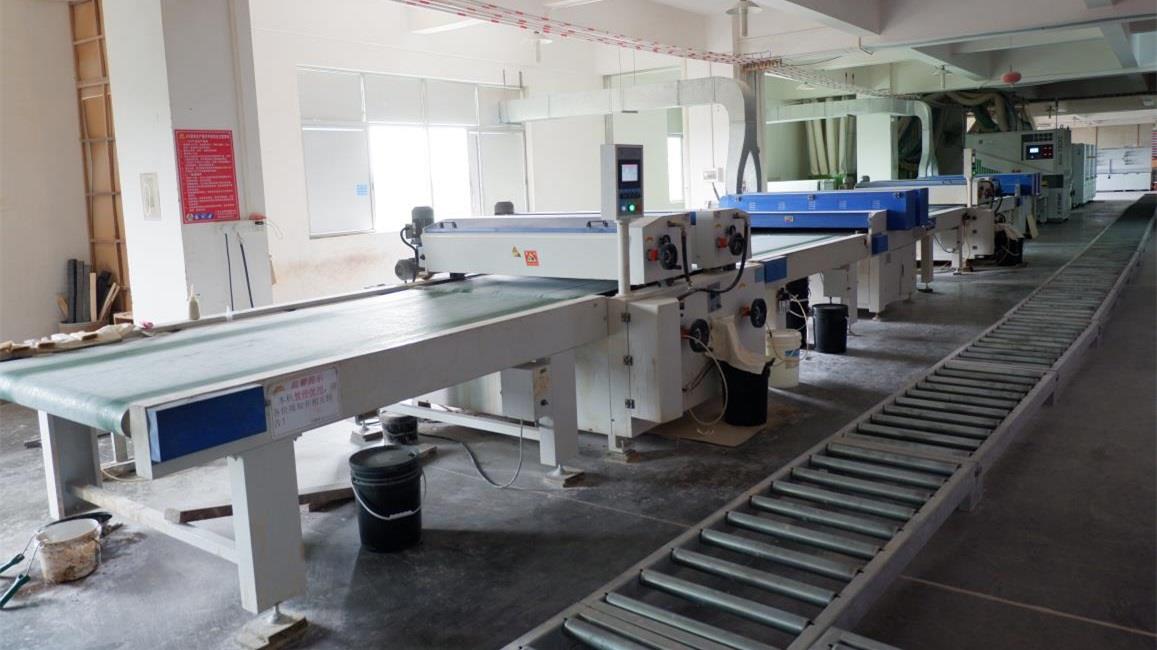
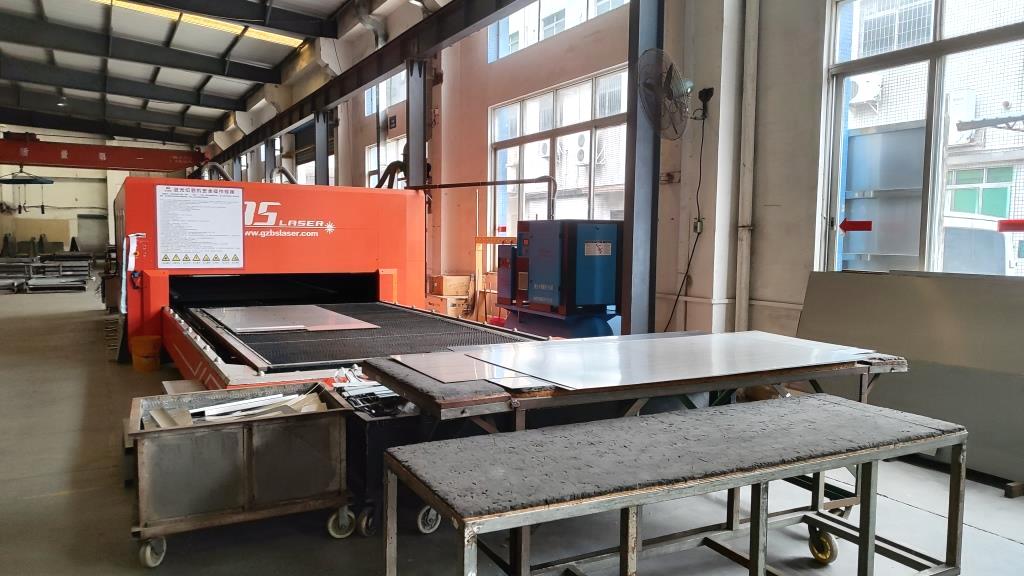
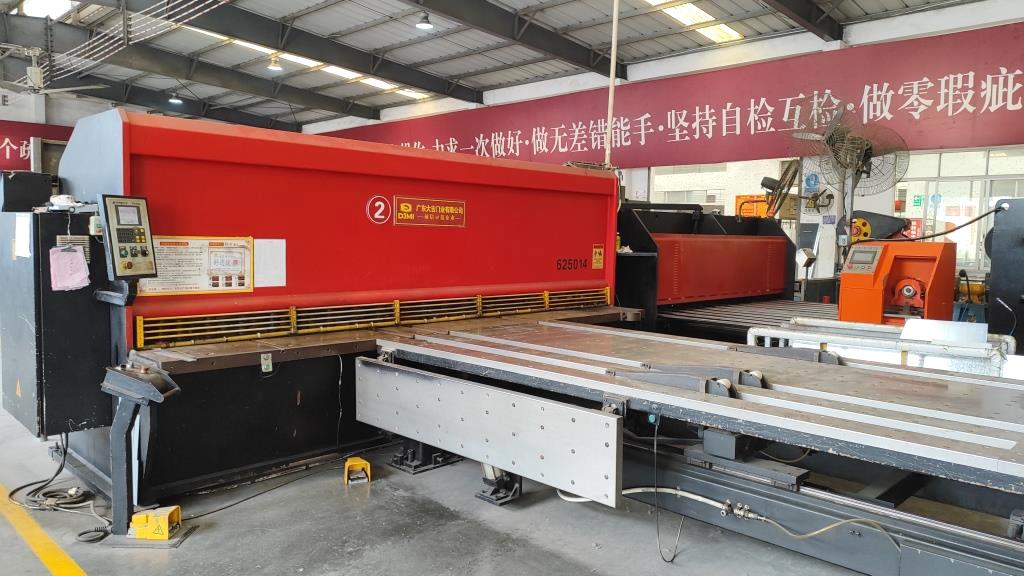
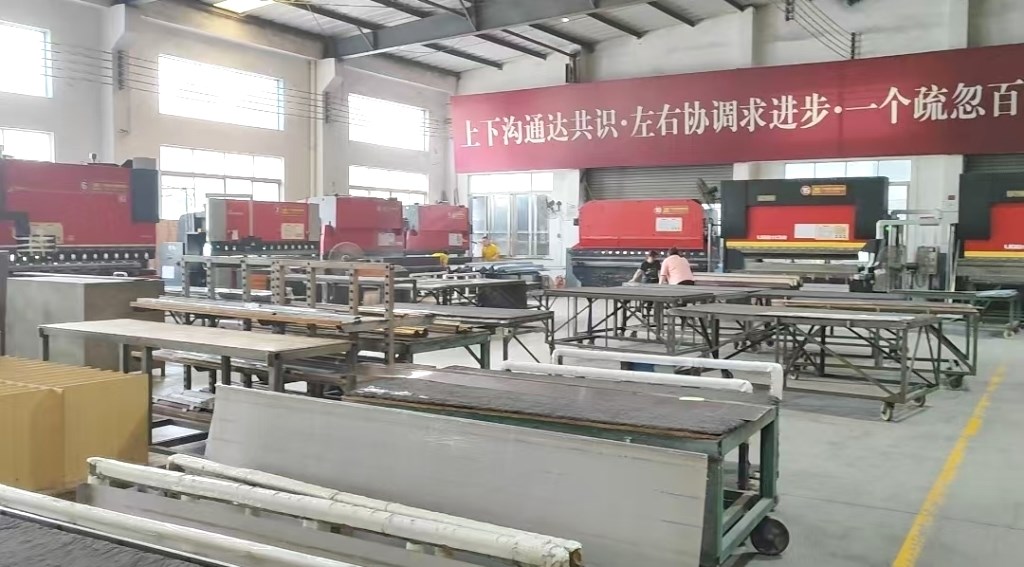
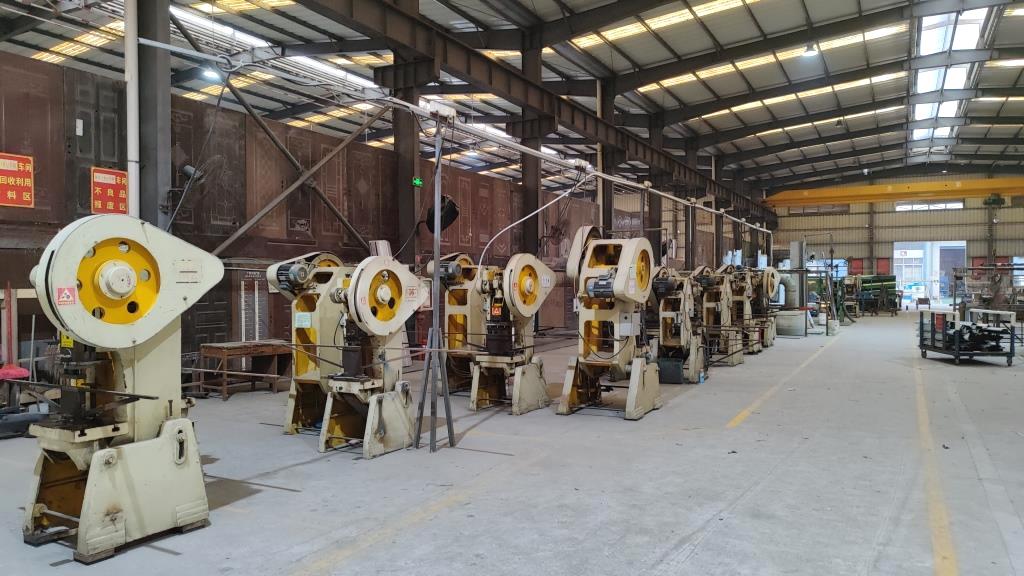
The industrial symbiosis of raw material access, engineering expertise, and logistics clusters provides unmatched sourcing advantages.
Zhejiang's industrial hardware corridors locate raw copper refineries, structural steel processing hubs, high-grade powder coating plants, and lockset manufacturers within a tight geographical area. This lowers shipping and lead times on custom parts.
By using modern alloys—such as cold-rolled steel, marine-grade T6063-T6 aluminum, and anti-corrosive zinc-alloy frames—Chinese manufacturers create door cores that withstand structural twisting, flexing, and atmospheric corrosion.
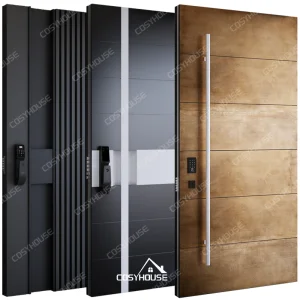
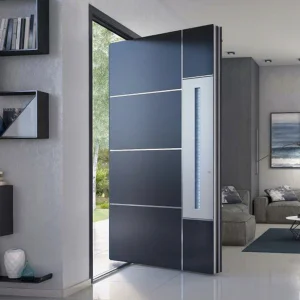
Our engineering division supports complete flexibility. From single oversized pivot entry designs to matching multi-unit hospitality configurations, we match exact client architectural blueprints and custom lock specifications.
How custom door materials and internal structural cores are tailored to withstand diverse global microclimates and regional regulatory frameworks.
Installations in arid environments demand extreme protection from UV degradation and thermal expansion. Our entryways utilize multi-layered thermal breaks, EPDM dual-lip perimeter seals, and fluorocarbon powder coatings to prevent color fading and warp from significant temperature fluctuations.
To comply with high efficiency standards, our doors incorporate polyurethane foam insulation and thermal breaks. These details achieve U-Values below 0.8 W/m²K while satisfying local building codes for wind load and water infiltration resistance.
High relative humidity and coastal salt mist accelerate red rust. We recommend zinc alloy skins, hot-dip galvanized steel subframes, or T6063-T6 aluminum profiles treated with outdoor PVDF finishes to ensure durability.
Verify key technical certifications and testing thresholds required for import clearance and construction sign-off.
| Performance Category | Technical Parameters & Standards | Recommended Project Application |
|---|---|---|
| Thermal Insulation | U-value ≤ 0.8 to 1.2 W/(m²·K) | EN ISO 10077-1 | Cold Climates & Passive House Developments |
| Acoustic Attenuation | Sound reduction rating from 35dB up to 45dB | ISO 717-1 | Urban Luxury Residences & Executive Offices |
| Security Classification | RC2, RC3, and RC4 Resistance Classes | EN 1627 Standards | High-security Villa Entrances & Safe Rooms |
| Fire Resistance | 30 to 120 minutes continuous protection | UL 10C / EN 1634 | Commercial Frontages & Multi-Family Apartment Units |
| Surface Treatment | PVDF Coating, Fluorocarbon, or Multi-layer Electroplating | High UV & High Salinity Coastal Environments |
Technical answers to key structural, metallurgical, and international logistics questions raised by developers and procurement directors.
Armored doors incorporate a heavy-gauge internal steel plate core (typically 1.5mm to 2.0mm structural galvanized steel) combined with perimeter steel stiffening ribs. Standard security doors rely primarily on single or dual-sheet metal skins. Armored doors allow for dual-face panel customization (e.g., solid wood paneling on the interior face and weather-resistant zinc alloy or structural steel cladding on the exterior), allowing interior design flexibility without sacrificing structural defense.
We configure custom entryways with Italian-style multipoint mechanical locksets, multi-bolt anti-drill escutcheons, or motorized electronic locksets. Our smart configurations are fully compatible with RS-485 interfaces, Bluetooth LE, fingerprint biometric scanners, facial recognition cameras, and IP-based smart home controllers. We can integrate pre-routed internal wire conduits to simplify installation on-site.
For coastal applications, we apply multi-step anti-corrosion treatments. First, we utilize structural zinc alloy sheets or hot-dip galvanized steel. After surface prep, we apply an electrostatic zinc-rich primer, followed by a thick fluorocarbon (PVDF) finish coat or a thermal-cured outdoor powder layer. This process passes standard ASTM salt spray testing, protecting components from peeling or pitting.
While our production is optimized for large development projects, we support flexible MOQ requirements beginning at 10 sets for customized doors, and single units for high-end oversized pivot entries. General production lead times range from 25 to 35 days from technical drawing sign-off and deposit receipt, depending on material complexity and surface treatments.
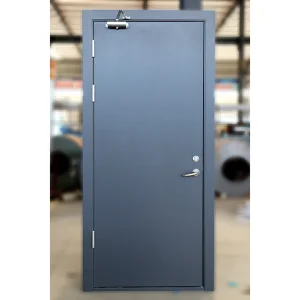
Yes. Zhejiang Larsom Door products carry certifications including ISO9001, CE, and select European standards for air permeability and wind resistance. We fabricate our fire-rated doors to satisfy commercial 1-hour to 3-hour ratings in compliance with BS 476, EN 1634, or UL 10C guidelines, depending on project-specific regional mandates.
 Larsom Door