Why Do WPC Doors Have Better Termite Resistance?

Time:2026-09-19 Author:Sophia
0%

Why do wpc doors have better termite resistance? The answer begins with their material structure. Wood-plastic composite, or WPC, combines wood fibers with thermoplastic polymers. This creates a dense door panel with fewer exposed cellulose pathways. Termites may find the surface less inviting than untreated solid wood.

Dr. Rudolf H. Scheffrahn, a respected termite researcher, has emphasized a practical principle: “Termites require cellulose, moisture, and suitable access to survive.” This observation helps explain WPC’s advantage. The plastic component interrupts continuous feeding routes. It also reduces water absorption when the door is properly sealed. A dry, tightly finished frame offers fewer favorable conditions around the threshold.

Still, WPC is not magically termite-proof. That wording can mislead buyers. Poor installation may leave gaps beside the frame, while damaged edges can expose wood fibers. I have seen how a small opening near a damp doorstep can become a maintenance problem. Quality varies between manufacturers, too. Some products contain more wood content and need stronger edge protection.

This is why product testing matters. Look for documented termite-resistance data, water-absorption results, and clear installation guidance. Check the hinges, bottom rail, and locking areas carefully. These details often decide long-term performance. WPC doors can provide excellent resistance, but only when material quality, sealing, drainage, and installation work together. The honest answer is less dramatic. Better resistance does not mean unlimited resistance.
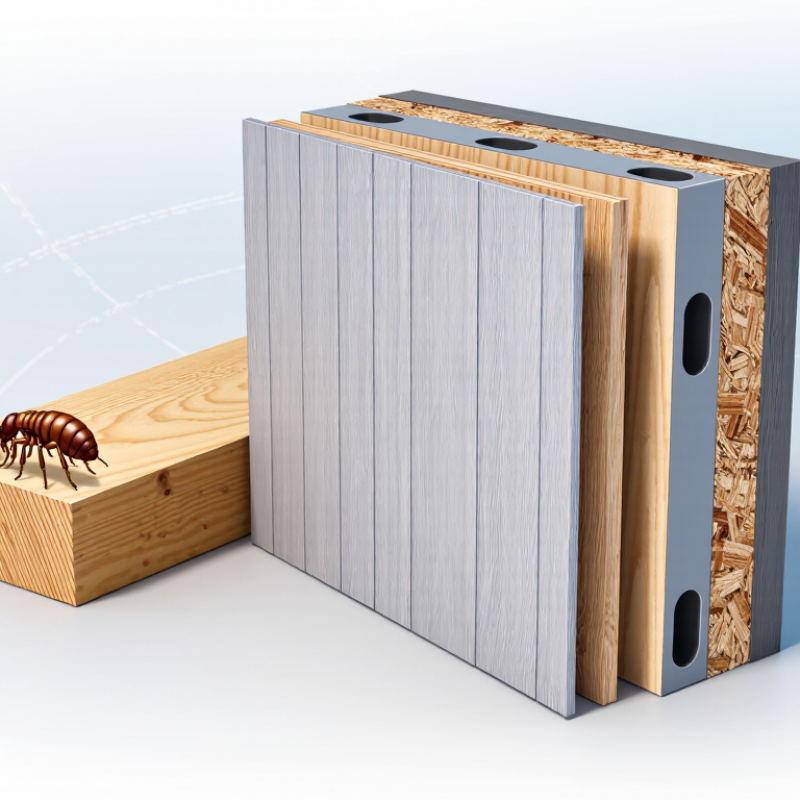
Why Do WPC Doors Have Better Termite Resistance?

WPC Doors: Composition and Basic Properties

Why Do WPC Doors Have Better Termite Resistance?

WPC doors combine wood fibers, thermoplastics, and performance additives. Common formulations contain roughly 50% wood flour and 50% polymer, although recipes vary by manufacturer. The USDA Forest Products Laboratory explains that wood-plastic composites depend on fiber distribution, polymer coverage, and moisture control. These details matter more than appearance alone.

Termites mainly consume cellulose, especially in damp wood with accessible pores. In WPC, thermoplastic surrounds many wood particles and reduces direct exposure. Its lower water absorption also limits the humid conditions termites prefer. A 2021 USDA Forest Service review notes that moisture strongly influences fungal decay and insect activity in wood products.

The principle is practical: a dry, sealed door is harder to attack.

Still, “termite-resistant” does not mean termite-proof. Poorly mixed WPC can leave exposed fibers near cut edges, screw holes, or damaged surfaces. Field inspections should check these areas closely. EN 15534 testing evaluates properties such as water absorption, swelling, and durability, but performance depends on the tested formulation.

Some products may perform well in laboratory tests yet age differently outdoors. That uncomfortable gap deserves attention.

Installation quality remains essential, particularly around the threshold where soil, water, and small gaps can meet.

How Termites Attack Conventional Door Materials

Why Do WPC Doors Have Better Termite Resistance?

Termites do not attack doors randomly. They seek cellulose, moisture, and sheltered pathways. Conventional wooden doors contain roughly 40–50% cellulose, according to the USDA Forest Service Wood Handbook. Subterranean termites can enter through tiny floor gaps, frame joints, and damaged edges. Their workers may remain hidden inside the door core. You may notice the problem late.

Moisture makes the attack easier. A leaking threshold, wet bathroom corner, or poorly sealed bottom edge can soften wood fibers. MDF and plywood may swell after repeated exposure. The surface can still look painted and clean. Inside, tunnels may already weaken the panel.

The National Pest Management Association estimates that termites cause more than 5 billion dollars in property damage annually in the United States.

That figure includes repairs, inspections, and hidden structural losses.

WPC doors use a polymer matrix mixed with wood fibers. The polymer limits direct access to cellulose and usually reduces water absorption. This makes the door less attractive than untreated wood. ASTM D7031 also emphasizes that WPC performance depends on its formulation, processing, and testing conditions. So, WPC is not automatically termite-proof. Poorly sealed cut edges can still expose wood content. I would inspect the bottom rail carefully, especially after installation. That small detail is often missed. Even a durable panel can fail when moisture remains trapped around its frame.

Why WPC Structure Limits Termite Damage

Why Do WPC Doors Have Better Termite Resistance?

Why WPC Structure Limits Termite Damage

WPC doors combine wood fibers with thermoplastic materials, creating a dense, engineered structure. Unlike untreated timber, the surface offers fewer exposed cellulose pathways for termites to follow. The plastic component also reduces water absorption. That matters because damp door edges can attract insects and support hidden damage. In practical inspections, a properly sealed WPC frame usually shows fewer soft spots around the sill and corners.

The structure limits termite damage in several ways. Its compact skin makes entry more difficult. Its internal composition does not provide the same continuous food source as solid wood. Termites may still investigate joints, cracks, or nearby wooden elements. They can exploit small gaps. Not invincible.

Installation remains important. An unsealed cut edge, loose threshold, or moisture-filled gap can weaken the door system over time. Regular checks should focus on the lower frame, hinges, and wall connections. Look for mud tubes, hollow sounds, powder, or unusual swelling. These signs require professional assessment, not guesswork.

It is easy to overstate WPC’s protection. WPC is termite-resistant, not automatically termite-proof. Product composition, surface quality, ventilation, and local pest pressure all influence performance. A well-made door can limit the spread of damage, but it cannot replace sensible building maintenance. That distinction is often overlooked.

Why Do WPC Doors Have Better Termite Resistance?

This representative composition comparison uses the common midpoint of typical WPC formulations, which often contain about 50–70% wood fiber and 30–50% thermoplastic polymer by weight. Termites feed mainly on cellulose-based material; the polymer matrix is not a cellulose food source and can separate or encapsulate wood fibers, limiting continuous feeding paths. WPC is therefore more termite-resistant than untreated solid wood, although performance varies by formulation and construction.

Material Features That Improve Termite Resistance

WPC doors combine wood fibers with thermoplastic resin and processing additives. This structure leaves termites with less digestible cellulose than solid timber. The plastic phase also limits water absorption through the door skin. Less moisture means fewer soft, decaying areas that attract termite activity. A dense outer layer creates a harder surface for insects to penetrate.

Small details matter. Well-sealed edges, corners, and hinge cutouts reduce exposed material. In practical site inspections, damaged seals often become the weaker point. Quality WPC formulations use consistent fiber distribution and controlled density. This consistency helps prevent hidden voids, where moisture can collect unnoticed. Some doors include protective coatings or capped surfaces for extra resistance.

These features improve durability, but they do not make a door termite-proof. Installation still matters. Unsealed frames, damp thresholds, and nearby soil can create access routes. Reliable assessment should combine technical data, laboratory termite tests, and local installation experience. I would also inspect cut edges after fitting, because field alterations can expose fibers. The material may resist termites well, yet poor drainage can undermine that advantage. This is an easy point to miss.

Factors Affecting Long-Term Termite Protection

Why Do WPC Doors Have Better Termite Resistance?

Factors Affecting Long-Term Termite Protection

WPC doors combine wood fibers with polymers, creating a dense material that termites cannot digest like untreated timber. Their low moisture absorption also reduces conditions that support termite activity. However, resistance is not permanent protection. Poor installation can create hidden weaknesses around frames, joints, and threshold areas.

Long-term performance depends heavily on edge sealing and drainage. If cut edges remain exposed, water may enter and weaken the internal structure. Soil, leaves, and standing water near the doorway can also encourage termite movement. During site inspections, I have seen well-made doors perform poorly because gaps beneath frames were ignored. That detail matters. Regular checks should include hinges, door bottoms, wall joints, and nearby wooden structures. Small cracks deserve attention before they become expensive repairs.

Tips: Keep the threshold dry, seal every cut edge, and maintain a small gap from soil or mulch. Use corrosion-resistant fasteners and confirm that the frame fits tightly. Inspect the door twice yearly, especially after wet seasons. A professional installer can identify concealed gaps and verify suitable drainage. WPC reduces termite risk, but it does not replace sensible maintenance. Mistakes happen. Careful installation remains the strongest long-term safeguard.

Why Do WPC Doors Have Better Termite Resistance? - Factors Affecting Long-Term Termite Protection

Protection Factor How WPC Doors Typically Perform Why It Matters for Termite Resistance Long-Term Consideration
Reduced edible wood content WPC is generally manufactured from wood fibers or flour combined with thermoplastic polymers and additives. The polymer portion is not a food source for termites. Lower available cellulose can reduce the nutritional value of the door compared with untreated solid wood. Resistance depends on the actual wood-to-polymer ratio and the uniformity of the composite.
Low moisture uptake The polymer matrix can limit water penetration and reduce swelling compared with many unfinished wood products. Termites generally require moisture for survival, and damp conditions can make wood-containing materials more vulnerable. Poor drainage, standing water, or damaged edges can still create localized moisture problems.
Fewer cracks and exposed fibers Well-produced WPC surfaces are relatively dense and can have fewer open pores than untreated timber. A less accessible surface makes it more difficult for termites to reach wood fibers and establish feeding paths. Cutting, drilling, impact damage, and poorly sealed joints may expose the wood component.
Material density and structure Extruded or molded WPC profiles are usually manufactured with a consistent outer skin and controlled internal structure. A compact surface can restrict concealed entry points and reduce easy tunneling through the material. Density varies by formulation, foaming level, processing method, and profile design; it should not be assumed from appearance alone.
Chemical formulation Some formulations include stabilizers, pigments, lubricants, or preservatives that may improve durability, but not every additive is a termite treatment. The polymer itself provides much of the physical barrier, while specific additives may offer additional protection when properly tested. A product should only be described as termite-resistant when supported by relevant test documentation or certification.
Surface coating and sealing A continuous surface finish can protect the composite from moisture, abrasion, and exposure of wood fibers. An intact surface reduces access to the cellulose-containing portion of the product. Coatings can wear or peel; exposed areas should be repaired and kept dry.
Resistance to decay WPC is generally less prone to biological decay than untreated wood because the polymer reduces water access and protects some wood particles. Reducing fungal decay helps prevent the softened, damp conditions that may increase the attractiveness of wood-containing materials to termites. WPC is not completely immune to mold, mildew, or degradation, especially when water remains trapped inside joints.
Installation quality Correct installation can keep the door above wet floors, protect cut ends, and reduce gaps around the frame. Termites can enter through adjacent soil, wall cavities, cracks, or unprotected openings even when the door material is resistant. The frame, threshold, wall connection, and surrounding structure require the same level of protection as the door slab.
Environmental exposure WPC generally tolerates humid environments better than many untreated wood materials, although heat and ultraviolet exposure can affect appearance and dimensional stability. Maintaining dimensional stability helps prevent gaps and cracks that could provide concealed access. Use suitable weather protection, allow proper drainage, and inspect exposed doors periodically.
Maintenance and inspection WPC usually requires less routine termite-related maintenance than untreated wood, but it still needs visual inspection. Early detection of mud tubes, damaged seals, moisture, or adjacent wood infestation helps prevent wider structural problems. Termite resistance is not termite-proofing; building inspections and local pest-control measures may still be necessary.

Note: WPC doors are generally more termite-resistant than untreated wood doors, but performance varies with composition, manufacturing quality, exposed edges, installation, moisture conditions, and local termite species. No WPC product should be considered completely termite-proof without supporting test evidence.

FAQS

What are WPC doors made from?

WPC doors combine wood fibers, thermoplastics, and performance additives. Many formulations use about equal parts wood flour and polymer. Recipes vary.

Why do WPC doors resist termites better than untreated timber?

Thermoplastic surrounds many wood particles, reducing direct access to cellulose. Lower water absorption also creates less moisture for termite activity. Keep it dry.

Does termite-resistant mean completely termite-proof?

No. Exposed fibers may remain around cut edges, screw holes, or damaged surfaces. Termites can exploit overlooked weaknesses.

Which door areas need the closest inspection?

Check the threshold, door bottom, frame joints, hinges, screw holes, and wall connections. Small gaps can collect water and soil.

How does installation affect long-term termite protection?

Poor installation can create hidden entry points around frames and thresholds. A tight frame, sealed edges, and proper drainage reduce these risks.

What maintenance helps preserve termite resistance?

Inspect the door twice yearly, especially after wet seasons. Remove leaves, standing water, and soil near the threshold. Seal visible cracks quickly.

Why is edge sealing important for WPC doors?

Cut edges can expose internal fibers and allow water to enter. Sealing these areas helps protect the structure from moisture-related weakening.

Can laboratory testing guarantee outdoor performance?

No. Testing can measure water absorption, swelling, and durability for a specific formulation. Outdoor aging may produce different results. That gap matters.

What should homeowners remember about WPC door protection?

WPC reduces termite risk but does not replace maintenance. Use corrosion-resistant fasteners and keep soil or mulch slightly away. Mistakes happen.

Conclusion

WPC doors are made from a blend of wood fibers and polymer materials, creating a dense, moisture-resistant structure with stable dimensions. Unlike conventional wooden doors, which may contain cellulose and hidden gaps that attract termites, or some untreated materials that can soften and crack, WPC provides fewer accessible food sources and entry points. This explains why do wpc doors have better termite resistance: their composite structure is difficult for termites to consume, tunnel through, or use as a nesting environment.

The material’s low water absorption, reduced cracking, and resistance to decay further help limit termite-related damage over time. However, long-term protection also depends on proper manufacturing, sealed edges, suitable installation, and regular inspection of surrounding walls, floors, and frames. Although WPC can significantly reduce the risk of termite attack, good ventilation, moisture control, and timely maintenance remain important for preserving the door’s performance and extending its service life.

Sophia

Sophia

Sophia is a dedicated marketing professional with an exceptional depth of knowledge about her company's products and services. With a keen understanding of market trends and customer needs, she crafts insightful blog posts that not only inform but also engage readers, enriching the company’s online......