The question “how heavy is a standard residential tank door” sounds simple, but “standard” can be misleading. A tank door may mean a small metal access hatch or a large concrete cover, and those are not comparable. Its weight depends on the opening size, material, thickness, reinforcement, and any attached frame. A steel panel may be manageable by one person; a thick concrete lid can require lifting equipment. Check the product’s data sheet before handling it.
There is no single authoritative industry report that sets one weight for every residential tank door. Manufacturer specifications are more useful because they describe the exact model and materials. Safety guidance from agencies such as OSHA also makes clear that heavy objects should be assessed and handled with appropriate precautions; it does not provide a universal tank-door weight. Small details matter.
I could not verify a published statement from a named industry expert specifically about residential tank-door weights, so attributing a quotation would risk misleading readers. A reliable estimate starts with the manufacturer’s stated weight, or with measurements and material details when the label is missing. Even then, corrosion, repairs, or trapped moisture may change the real-world load. Don’t guess from appearance alone.
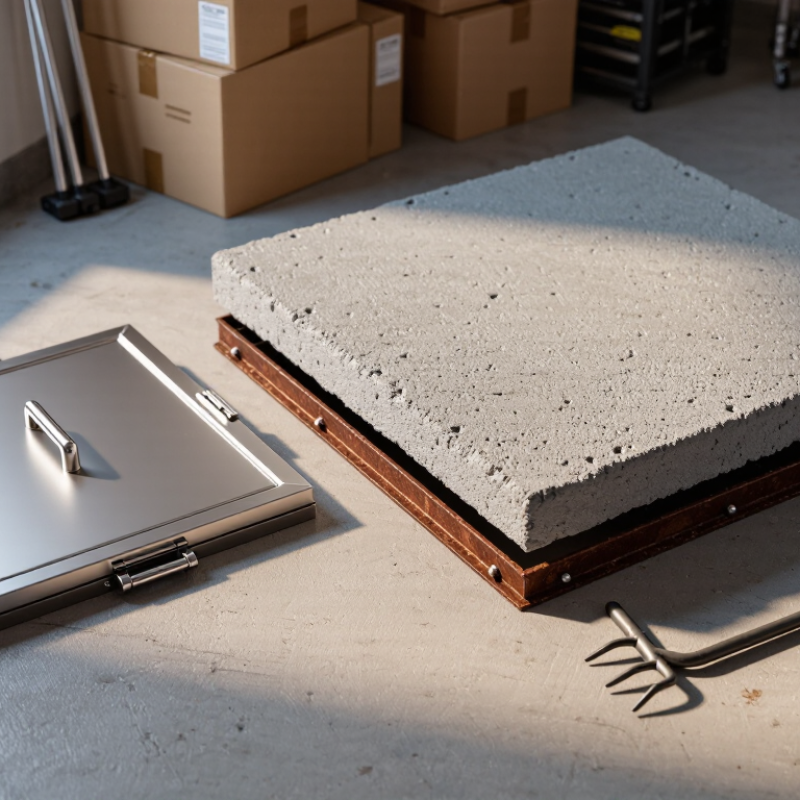
A standard residential tank door is usually an access opening or hatch, not a single standardized door size. Its purpose is practical: allowing inspection, cleaning, and maintenance of the tank. The exact opening depends on the tank’s use, material, shape, and installation.
A septic tank, for example, may have separate openings above its inlet and outlet, while a household water-storage tank may use a different hatch arrangement. There is no universal residential dimension that applies to every tank. That distinction is easy to miss.
The U.S. Environmental Protection Agency’s 2002 Onsite Wastewater Treatment Systems Manual describes septic-tank access as important for inspection and maintenance, but does not establish one door size for all residential tanks. For steel water tanks, AWWA D100-21 provides engineering requirements for tank design; it is not a universal residential hatch-sizing guide.
In practice, check the tank’s model documentation and measure the clear opening, not just the outer lid. A tape measure across the exposed frame helps. Also note the cover’s shape and fastening method. Small details matter. A replacement that looks right may still leave too little clearance for safe service access.
A typical residential tank door weighs about 2 to 90 pounds, depending on its material and size. These are approximate ranges for the door itself, not necessarily the frame or attached hardware. Size changes everything.
18 × 18 inches
24 × 24 inches
Plastic or aluminum: roughly 8 to 30 pounds
Steel: roughly 25 to 55 pounds
36 × 36 inches
A reinforced steel door may reach 45 to 90 pounds.
Thickness, ribs, insulation, and corrosion-resistant coatings can shift these estimates. A frame can add substantial weight.
Tips
Measure the door and check whether the listed weight includes its frame. If weight matters for replacement or handling, use the product specification rather than a visual estimate. Hinges and handles can make a door feel lighter or heavier than it is. These ranges are useful for planning, not lifting limits.
How Heavy Is a Standard Residential Tank Door?
There is no single standard weight for a residential tank door. A small molded access panel may weigh roughly 5–15 pounds, while a larger insulated or metal-reinforced hatch can exceed 30 pounds. Treat these figures as estimates: dimensions and construction vary widely. A door measuring two feet across can feel much heavier when its frame and hinges are included.
Material and thickness make a noticeable difference. Fiberglass and molded plastic are often lighter than steel, but thick panels may still be awkward to lift. Reinforcing ribs, insulation, a perimeter frame, and heavy hinges all add weight. Moisture can also affect some materials over time. That detail is easy to overlook. Check the door’s product label or installation documents for its actual weight, especially when planning a replacement.
Tips: Measure the opening and inspect the hinge side before ordering. Don’t judge weight by appearance alone. If the hatch feels unbalanced or difficult to handle, get help lifting it; a small panel can still pinch fingers or strain your back.
A residential tank door has no universal weight. Material, diameter, thickness, reinforcement, and attached hardware all matter. Check the access-cover label, product drawing, or installation record first. ASTM C478 covers precast concrete manhole structures, but it does not establish one weight for every residential tank cover. That estimate can mislead. For a rough check, a 24-inch concrete lid, 3 inches thick, weighs about 118 pounds when calculated at 150 pounds per cubic foot. Actual weight changes with the mix and embedded steel.
Verify the number with a platform scale or a properly rated crane scale, and record the units. If weighing in place, use a documented equipment reading rather than guessing from how the lid feels. Measure twice. NIOSH’s Revised Lifting Equation uses a 51-pound load constant only under ideal lifting conditions; it is not a safe-lifting limit for every person or situation. A heavy or awkward cover may need mechanical assistance, even when its measured weight seems manageable. I would treat a drawing-based estimate as provisional until a scale confirms it. Sources: ASTM C478; NIOSH, Applications Manual for the Revised NIOSH Lifting Equation, 1994.
There is no single standard weight for a residential tank door or access cover. Weight depends on the material, dimensions, thickness, frame, and attached hardware. The figures below are representative estimates, not specifications for a particular tank.
| Door or Cover Type | Representative Size | Estimated Weight | How to Identify and Verify |
|---|---|---|---|
| Reinforced concrete cover | 18 in. diameter, about 2–3 in. thick | About 40–65 lb (18–29 kg) | Check for concrete texture and embedded reinforcement. Measure diameter and thickness; a rough estimate can be calculated using concrete density of about 145 lb/ft³. |
| Reinforced concrete cover | 24 in. diameter, about 2–3 in. thick | About 75–115 lb (34–52 kg) | Measure the cover itself, not just the opening. Reinforcing steel, lifting inserts, and a thicker edge can increase the actual weight. |
| Steel access door or hatch | 24 × 24 in. panel, 1/8 in. steel plate | About 20 lb (9 kg) for the plate alone; more with frame and hardware | Look for a metal panel and measure its dimensions and thickness. Hinges, a frame, stiffeners, and a locking mechanism add weight. |
| Steel access door or hatch | 24 × 24 in. panel, 1/4 in. steel plate | About 41 lb (19 kg) for the plate alone; more with frame and hardware | Use the panel’s stamped specification or weigh the complete door assembly. Plate-only estimates do not include attached components. |
| Molded plastic access cover | Commonly a small round or square residential access cover | Often roughly 5–20 lb (2–9 kg); size and construction vary | Check for molded plastic construction and any molded-in weight or part information. Confirm by weighing the complete cover, as ribs and reinforced sections affect weight. |
| Fiberglass access cover | Residential-size panel or cover; dimensions vary | Often roughly 10–30 lb (5–14 kg); construction varies | Look for a rigid, layered composite surface. Include attached frame and hardware when weighing; do not rely on appearance alone to identify the material. |
Verification: If the cover can be safely removed, weigh the complete assembly on a suitable platform or floor scale. For a plate-only estimate, steel weighs approximately 0.283 lb per cubic inch and concrete approximately 145 lb per cubic foot. Do not lift a heavy cover without appropriate equipment, and keep people clear of an open tank.
How Heavy Is a Standard Residential Tank Door?
A residential tank door rarely has one standard weight. Small insulated access panels may weigh 10 to 25 pounds, while steel or reinforced composite doors can exceed 70 pounds. Size, frame design, insulation, and attached hardware all matter. A wet or corroded door may feel heavier than expected.
Safe handling starts before removal. Measure the opening and inspect the hinges, bolts, handles, and surrounding wall. Do not rely on one person’s estimate. Two adults should handle most large doors, especially when the lifting path is narrow or uneven. Use sturdy gloves, protective footwear, and a clear landing area. Keep fingers away from hinge gaps. It happens quickly.
For replacement, match the original opening and confirm the load rating, swing direction, seal, and fastener condition. A door that fits the frame may still leak air or water if the gasket is compressed unevenly. Support the panel before removing the final hinge or bolt. Never force a seized fastener with your body positioned beneath the door.
A lifting aid can reduce strain, but it does not replace planning. Check the manufacturer’s installation instructions, local safety requirements, and the tank’s service manual. If the frame is cracked, distorted, or chemically damaged, pause the replacement. The door may not be the real problem. Recheck your assumptions.
No single weight applies. Size, material, thickness, reinforcement, insulation, and hardware change the result. Some panels weigh 10 to 25 pounds. Steel or reinforced doors may exceed 70 pounds. A wet door can feel heavier.
Measure its diameter and thickness. A 24-inch concrete cover, 3 inches thick, weighs about 118 pounds. This estimate assumes a density of 150 pounds per cubic foot. Actual weight changes with the concrete mix and embedded steel.
Look at the cover label, product drawing, or installation record. Check the service manual too. Treat drawing-based numbers as provisional. My first estimate may be wrong.
Use a platform scale or properly rated crane scale. Record pounds or kilograms clearly. Do not judge by feel. Measure twice.
Large doors usually need two adults. Narrow openings and uneven ground increase the risk. A lifting aid may provide better control. Plan the landing area before removal.
Inspect the hinges, bolts, handles, frame, and nearby wall. Wear sturdy gloves and protective footwear. Keep fingers away from hinge gaps. Support the panel before removing the final fastener.
Match the opening size and confirm the load rating. Check the swing direction, gasket, hinges, and fasteners. Uneven gasket pressure may allow air or water to pass. A correct fit is not always a sealed fit.
Stop if the frame is cracked, distorted, or chemically damaged. The door may not be the real problem. Do not force seized fasteners while standing underneath. Recheck the situation.
A standard residential tank door does not have one fixed weight. Its weight varies with the door’s material, dimensions, thickness, reinforcement, and attached hardware. Smaller doors made from lighter materials may be manageable by one person, while larger or heavier designs can require two people or lifting equipment. To understand how heavy is a standard residential tank door, check the manufacturer’s specifications or product label, and account for any frame, hinges, handles, or insulation included in the stated weight.
Before handling or replacing a tank door, verify its dimensions and weight using reliable documentation or a suitable scale, and compare them with the replacement door’s specifications. Support the door securely during removal and installation, use appropriate lifting techniques, and seek assistance when its size or weight makes it difficult to control. Careful measurement and planning help ensure a safe fit and reduce the risk of injury or damage.

Larsom Door