China Top 10 Steel Wood Security Doors Best Thickness?

Time:2026-09-29 Author:Liam
0%

Choosing a security door is not a matter of picking the thickest panel available. Buyers comparing China’s top steel wood security doors should look at the complete construction: steel-skin thickness, internal reinforcement, frame depth, lock area, and installation quality. A thick leaf can still disappoint if its frame flexes or its hinges are poorly secured. Details matter.

So, what is the best thickness for a steel wood security door? There is no single figure that suits every home. A door’s stated thickness may describe the full leaf, not the steel facing, and these measurements are not interchangeable. Ask suppliers for a section drawing and a written specification. Check the steel gauge or millimeter thickness, core material, frame dimensions, and test documentation. Compare like with like.

As an experienced door engineer might put it, “Thickness matters only when the frame, reinforcement, and locking points work together.” This is a general engineering principle, not a verified quotation from a named specialist. That distinction matters. Before choosing among the top ten options, match the door to its opening, climate, expected use, and verified performance claims. A measured, documented choice is more useful than a bold number on a product page.
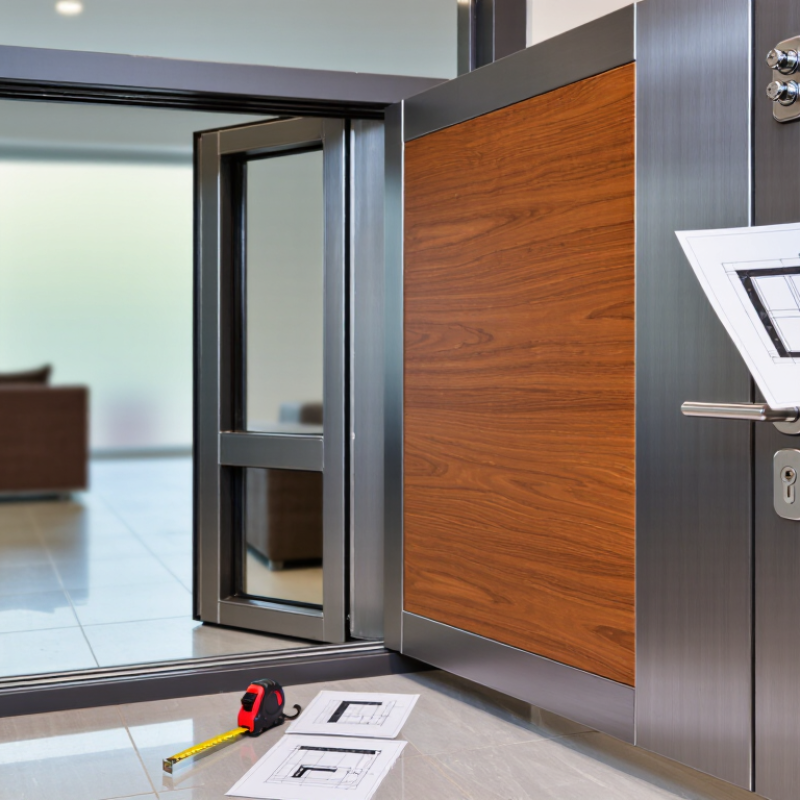
China Top 10 Steel Wood Security Doors Best Thickness?

What Defines a Steel-Wood Security Door?

A steel-wood security door combines a steel structure with wood surfaces or trim. The steel forms the working core, including the frame and internal reinforcement. Wood adds a warmer appearance and can soften the feel of a hallway. Tap the surface, and you may hear a different sound from the steel edge and the wood panel.

The label alone tells you little. Some doors use a steel sheet over a reinforced core, while others have wood panels attached to a steel frame. Ask what the stated thickness measures: the steel sheet, the door leaf, or the complete assembly. These are not interchangeable measurements.

A thicker leaf is not automatically stronger; frame construction, hinge attachment, lock reinforcement, and installation also matter. Details matter.

For a practical comparison, inspect a cutaway sample or request a clear construction specification. Check whether steel thickness is stated separately from total door thickness, and look for consistent panel seams and firmly attached hardware. A door may look substantial yet have thin skin. I would not judge security by weight or appearance alone; that shortcut is tempting, but incomplete. The best thickness depends on the design, the opening, and the level of protection required. When specifications are vague, pause and ask for clarification.

How Door Thickness Influences Strength and Insulation

A thicker steel-wood security door can feel more substantial, but thickness alone does not prove it is stronger.

The steel skin, internal reinforcement, lock area, hinges, and frame all matter. A thick panel with weak edges may flex when pushed. Check the complete construction, not just the number in a product listing.

Thickness can also create space for a denser core, which may reduce heat transfer and soften outside noise. Yet the core material and perimeter seals often make the bigger difference.

On a cold morning, a poorly sealed door can let a narrow draft slip beneath it, even if its panel is thick. Small gaps matter.

Ask for measured panel thickness and details about the core and frame. Compare like with like; advertised dimensions may describe the slab, not the steel layer.

A heavier door may also need properly matched hinges and careful installation. There is no single best thickness for every home.

I would be cautious about choosing by thickness alone, because insulation performance is easy to overestimate from appearance. A quiet, snug closing fit is useful evidence, though not a substitute for construction specifications.

Which Measurements and Standards Matter When Comparing Doors?

When comparing steel wood security doors, ask what “thickness” actually measures. A 50 mm door leaf is not the same as 50 mm of steel; it may include timber, insulation, and internal reinforcement. Request the steel-skin thickness separately, in millimetres, and ask whether it refers to one face or both. Numbers can mislead. Also compare frame depth, jamb material, hinge count, and the dimensions of the clear opening. A thick leaf can still fit poorly if the frame is weak or installation leaves uneven gaps.

Check the test evidence, not just a security-grade label. Standards differ by market and intended use, so confirm the relevant local security, fire, and durability requirements with the supplier or a qualified installer. Ask whether the tested configuration matches the door you are buying, including its lock, hinges, frame, and glazing. A certificate for a similar model may not cover every size or hardware option. That detail is easy to miss.

Tips: Measure the wall opening at the top, middle, and bottom, then record width, height, and wall depth. Photograph the frame and note the swing direction. Compare the full assembly, not the leaf alone. If specifications are vague, request a written section drawing and material breakdown. It can feel tedious, but I would rather verify twice than assume a thicker door is automatically safer.

How China’s Top 10 Steel-Wood Security Door Options Compare

Comparing ten steel-wood security door options means looking beyond the advertised slab thickness. A useful shortlist spans thin, lightweight leaves; mid-range composite leaves; and thicker, reinforced designs with steel skins, internal ribs, and solid or honeycomb cores. Measure the leaf itself, not the frame or trim. The Steel Door Institute’s SDI 100 specification uses 1¾ inches (44.5 mm) as a standard steel-door thickness benchmark. That is a reference point, not proof of burglary resistance. A thicker leaf can still flex if its lock edge, hinges, or frame are weak.

Look closely at the build. A 50 mm door with a continuous steel perimeter and well-secured hinges may outperform a thicker panel with a soft core. Ask for independent test documentation: EN 1627 defines resistance classes, while related EN 1630 testing examines manual attack resistance. Compare certified results, lock reinforcement, hinge protection, and frame anchoring across all ten options.

That matters. In a showroom, inspect the exposed edge and check whether the wood layer is decorative or structural. I would not rank doors by thickness alone; real installation quality is easy to overlook, and specifications do not tell the whole story. A door that feels heavy may still have a vulnerable frame.

How to Choose the Best Thickness for Your Home

China Top 10 Steel Wood Security Doors: Best Thickness?

Choosing the best thickness starts with your door opening, not a sales label. A typical steel-wood security door uses a 45–50 mm leaf and 0.8–1.2 mm steel skins. For detached homes, 1.0 mm steel can provide a practical balance between strength, weight, and hinge life. A thicker leaf is not automatically safer.

The Steel Door Institute’s SDI 100 standard commonly identifies 1-3/4-inch steel door assemblies for building use. However, skin gauge and core construction still affect performance.

EN 1627:2021 evaluates complete door sets through Resistance Classes RC1 to RC6, rather than approving thickness alone. This matters.

A 1.5 mm panel with weak hinges may perform worse than a tested 1.0 mm assembly.

Check the frame, locks, hinge bolts, and threshold together. For homes facing heavy weather or higher security demands, consider 1.2–1.5 mm steel skins with reinforced frames.

Ask for test evidence, not only a thickness number. The National Association of Home Builders notes that entry-door durability depends on installation quality and weather sealing, not just material strength.

A useful field check is simple: open the door halfway and release it. Excessive movement suggests poor alignment or hinge support. Thickness helps, but it cannot repair a weak frame.

Truthfully, many buyers still choose by millimeters alone. That decision deserves more thought.

FAQS

Does a thicker security door always provide better protection?

No. Thickness alone does not prove strength. Steel skins, internal reinforcement, hinges, locks, and frames also matter. A thick panel can still flex near weak edges.

How can door thickness improve insulation?

A thicker panel may hold a denser core. This can reduce heat transfer and soften outside noise. However, core quality and perimeter seals often matter more.

What small detail can reduce insulation performance?

A narrow gap beneath the door can let cold air enter. Poor seals may weaken insulation, even with a thick panel. Small gaps matter.

Which measurements should buyers request?

Ask for the measured door-leaf thickness. Request core details, steel-layer thickness, frame construction, and sealing information. Advertised dimensions may include trim or framing.

Can a thinner door outperform a thicker door?

Yes. A thinner door with strong reinforcement, protected hinges, and a secure frame may perform better. Construction quality matters more than appearance.

Why do hinges and frames matter so much?

A heavy door needs properly matched hinges. The frame must also anchor securely into the surrounding wall. A vulnerable frame can weaken the complete assembly.

What should shoppers inspect in a showroom?

Examine the exposed edge carefully. Check whether the wood layer is decorative or structural. Test the closing fit and listen for gaps around the seals.

Are independent tests useful when comparing doors?

Yes. Look for documented resistance testing and comparable results. Standards can provide useful reference points. That is only a reference. Installation quality still matters.

Is a quiet, snug closing fit proof of good performance?

It is useful evidence, but not proof. Smooth closing may suggest better sealing and alignment. It cannot replace construction specifications or independent test documents.

What is the safest way to compare several door options?

Compare similar measurements and complete assemblies. Review the leaf, core, steel skin, hinges, lock reinforcement, frame, and anchoring. I might overvalue thickness without noticing installation weaknesses.

Conclusion

A steel-wood security door combines a durable steel core or frame with a wood-based surface layer, offering a balance of protection, appearance, sound reduction, and thermal insulation. Door thickness is important because it can affect structural strength, resistance to forced impact, heat retention, and overall weight. However, thickness alone does not determine quality. Buyers should also compare steel gauge, internal reinforcement, core materials, sealing systems, hinge strength, lock installation, fire performance, and dimensional accuracy. Relevant measurements and recognized testing standards can help ensure that advertised specifications reflect real performance.

When comparing China’s top 10 steel-wood security door options, consumers should evaluate construction consistency, insulation design, finish quality, customization, installation requirements, and after-sales support rather than focusing only on appearance. The ideal choice depends on climate, security expectations, wall conditions, and budget. For homeowners asking “what is the best thickness for a steel wood security door,” a well-engineered medium-to-heavy construction is often more practical than simply choosing the thickest model, provided it includes strong reinforcement, reliable seals, and professional installation.

Liam

Liam

Liam is a dedicated marketing professional with a profound expertise in the industry, where he excels at highlighting the unique advantages of our core products. With a keen understanding of market trends and consumer needs, Liam frequently updates our company’s professional blog, providing......