Luxury tank doors combine heavy panels, precise seals, and demanding access needs. Smart locks can add credential control, access records, and convenient entry, but they must suit the door’s structure. This guide compares ten options using practical criteria, not glossy feature lists. Fit matters. A keypad beside a thick door may be awkward to use with gloves or in poor light.
The key question is how to integrate smart locks into a luxury tank door safely. Begin by checking the existing latch, mounting depth, power route, and emergency egress requirements with a qualified vehicle or door technician. Confirm that the lock can handle expected vibration, moisture, temperature changes, and repeated use. A residential lock may look elegant, yet fail under vehicle conditions. Not every model belongs here.
Compare credential options, backup access, encryption practices, app permissions, installation support, and maintenance needs. Ask how access works when a phone battery dies or connectivity disappears. Test the lock with the door fully closed, then inspect alignment after repeated cycles. Keep a mechanical override where the design permits, and document who can add or remove users. No system is flawless. This shortlist helps owners and installers ask sharper questions before choosing, while leaving final compatibility checks to hands-on assessment.
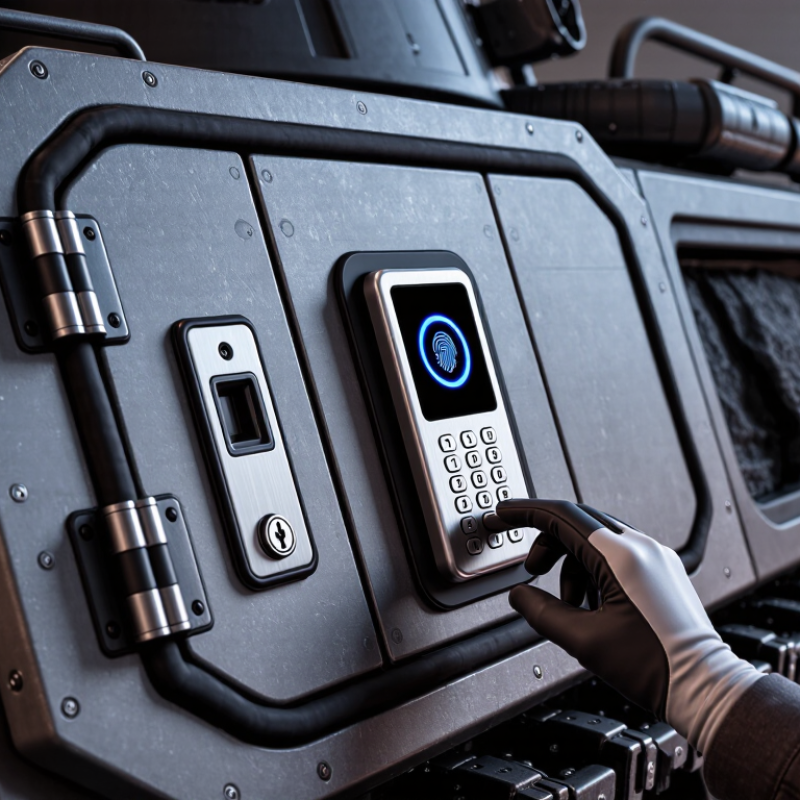
Luxury tank doors in China need more than a premium-looking keypad. Their mass, frame, hinge alignment, and bolt engagement shape real resistance. A smart lock cannot fix a poorly anchored frame. Check that the bolt reaches its full throw without scraping, even when seasonal humidity shifts the door slightly. Small detail. For family homes, private clubs, or secure collections, access should be assigned by user, not shared as one permanent code. Temporary credentials help when staff or contractors need limited access. Keep a reliable backup method, and test it during installation, not during a power failure.
Connected access also creates digital risks. Verizon’s 2024 Data Breach Investigations Report found that the human element was involved in 68% of breaches, including errors and social engineering. That figure covers breaches broadly, not smart locks specifically. Still, it highlights why simple, unique credentials and prompt removal of unused access matter. In Chinese homes, network stability can vary between rooms and buildings, so confirm whether the lock still works locally when the internet drops. Review encryption, access logs, battery warnings, and emergency egress before buying. No system is flawless. A polished app can distract from weak installation or neglected batteries; those basics deserve a second look.
A smart lock controls a door’s bolt through an electronic actuator. A keypad, phone credential, or fingerprint reader sends an access request; the lock checks it, then moves the bolt. On a heavy luxury tank door, alignment matters: even a small frame shift can make the motor strain or fail to latch. Manual override access is useful. So is a clear low-battery warning.
Feature choice should start with fit and failure behavior, not app extras. Check bolt travel, door thickness, backup power, offline access, and activity logs. NIST’s NISTIR 8259A defines seven baseline cybersecurity capability areas for Internet-connected devices, including access control, data protection, and software updates. It is a device-security framework, not a smart-lock rating, but it offers a practical checklist. Remote unlocking is convenient; it also depends on secure account recovery and dependable network settings. One weak point can undermine the whole system.
Tips: Test the lock with the door fully closed and slightly misaligned. Keep a physical override available, update firmware promptly, and review who can issue or revoke credentials. Convenience is not proof of security.
Smart locks authenticate a credential and then operate an electronic or electromechanical mechanism. For a heavy, armored, or vault-style door, confirm that the lock is compatible with the door, frame, multipoint hardware, and required emergency-egress arrangements. The options below are lock architectures and access methods, not endorsements of particular products.
| No. | Lock type or access method | How it works | Potential advantages | Key checks for a heavy door |
|---|---|---|---|---|
| 1 | Motorized deadbolt | An electric motor extends or retracts a bolt after an authorized credential is accepted. | Can offer keypad, app, or key operation, depending on the model. | Check bolt throw, door alignment, operating force, and whether the motor is rated for the installed hardware. A single deadbolt may not operate a door’s other locking points. |
| 2 | Electronic mortise lock | An electronic reader or controller authorizes the lock case, which operates the latch or bolt within a mortise pocket in the door edge. | Can suit doors designed for mortise hardware and support controlled entry features. | Confirm lock-case dimensions, door thickness, handing, spindle and cylinder compatibility, and whether the existing door preparation can be safely adapted. |
| 3 | Electrified multipoint lock | An electronic control operates compatible hardware that engages more than one locking point along the door edge. | Can coordinate electronic access with an existing multipoint locking arrangement. | Verify exact hardware compatibility, actuator capacity, alignment, and whether the door requires a lift-handle or other manual step before locking. |
| 4 | Keypad PIN entry | A keypad sends a code to the lock’s controller, which checks whether it is authorized and, if so, releases the mechanism. | Does not require a phone or a physical access card; temporary codes may be available on some systems. | Look for user-code management, lockout or rate-limiting protections, weather suitability, and a usable backup-entry method. |
| 5 | Fingerprint reader | A sensor captures fingerprint characteristics and compares them with enrolled templates before granting access. | Convenient entry without carrying a key or remembering a code. | Check enrollment and deletion controls, sensor performance in expected conditions, privacy and template storage details, and an alternative credential for failed reads. |
| 6 | RFID or NFC credential | A reader checks data from a nearby card, fob, or supported device against its authorized credentials. | Fast tap-based entry; lost credentials can often be removed from the system without changing a mechanical key. | Ask which credential technology is supported, how credentials are revoked, and whether access records and encryption are appropriate for the intended use. |
| 7 | Bluetooth-connected lock | A nearby phone communicates with the lock over Bluetooth; the lock verifies the authorized connection or command before operating. | Local phone-based access may work without a direct internet connection at the door. | Check required phone proximity, supported devices, account recovery, and what functions remain available if the phone battery is depleted. |
| 8 | Wi-Fi-connected lock or gateway | The lock connects directly to Wi-Fi or through a gateway, allowing supported remote commands and status updates over a network. | Can enable remote management and notifications when the network and service are available. | Check network coverage, gateway requirements, account security, software-update policy, and local operation during internet or power outages. |
| 9 | Hardwired access-control lock | A wired reader and controller validate a credential and signal an electric lock or compatible door hardware to release. | Can integrate with a managed access-control system and support centralized credential administration. | Plan wiring paths, power supply, backup power, fire and egress requirements, and the lock’s defined response to power loss. |
| 10 | Hybrid electronic lock with mechanical key override | Electronic credentials operate the lock in normal use, while a mechanical cylinder provides a separate key-based entry method where designed. | Offers an alternative if batteries, electronics, or network features are unavailable. | Confirm the override is genuinely independent, securely managed, accessible when needed, and compatible with the door’s security requirements. |
Selection checklist: Confirm door and frame compatibility, locking-point operation, emergency egress, credential administration, battery or wired-power plan, offline behavior, and independent mechanical or other backup access. A lock’s smart features do not by themselves establish the burglary resistance or security rating of the complete door assembly; check applicable local requirements and have the installation assessed by a qualified door or security professional.
A smart lock for a luxury tank door should fit the door’s construction, not just look refined. Measure door thickness, backset, handing, and mounting depth before comparing models. Heavy steel can weaken wireless signals, so test connectivity at the installed position. Test it in place. Confirm the bolt seats smoothly without forcing the door, and check that a mechanical override remains usable during a power or network failure. Choose documented temperature and ingress ratings that match the door’s actual environment.
Security needs both physical strength and careful access control. Verizon’s 2024 Data Breach Investigations Report found that 68% of breaches involved a non-malicious human element. For a shared facility, that makes individual user credentials, prompt access removal, and reviewable entry logs practical selection criteria. Ask how credentials are stored, whether updates are supported, and what happens when batteries run low. A polished interface is not enough; the less glamorous maintenance plan matters too.
Tips: Request installation drawings and verify lock dimensions before purchase. Test the door with gloves, in low light, and during a network outage. Keep a record of battery changes and access-permission reviews. Do not assume every steel enclosure behaves alike.
China’s top 10 smart locks for luxury tank doors should be compared by fit and function, not appearance alone. Thick steel panels, reinforced frames, and unusual door swings can limit standard lock designs. Measure door thickness, backset, and mounting depth before selecting a model. Request a written compatibility check from the supplier or installer. A polished keypad means little if the bolt catches on the frame. That matters. Useful features include encrypted credential storage, a mechanical backup, clear low-battery alerts, and access logs for authorized users. Some extras may add complexity without improving daily security.
When comparing ten options from China, review installation drawings, material specifications, warranty terms, and available technical support. Ask how the lock performs after repeated use, and whether replacement parts can be obtained. For a heavy door, alignment and professional installation are just as important as the electronic functions. Test keypad visibility in dim hallways and check whether the handle feels comfortable with gloves. Small details count. One weakness in this comparison is that published specifications cannot reveal every fit issue; confirm measurements on the actual door before ordering.
A smart lock on a luxury tank door must fit the door, not just look discreet. Measure its thickness, check the latch alignment, and confirm that the lock clears nearby trim. A qualified installer should follow the lock’s specifications and avoid weakening seals or structural panels. Test the door while it is open, then closed. It should latch without force. Small misalignments matter.
Access control works best when each authorized user has an individual credential. Set permissions around real duties, and remove access promptly when roles change. Keep an approved backup method available for battery failure or connectivity loss. Logs can help identify unusual entry patterns, but they need regular review. Don’t collect more access data than the operation requires.
Maintenance is routine, not glamorous. Inspect the latch, fasteners, and door seals for wear or corrosion. Replace batteries on a schedule, rather than waiting for a warning. Check that backup access works. After software updates, test every credential and confirm that the lock records events correctly. Dust, vibration, and temperature shifts can affect performance, so inspection intervals should reflect the door’s environment. A detail I might overlook: a lock can appear healthy while its mechanical override sticks. Test it carefully, and document any recurring faults.
Installation, Access Control, and Ongoing Maintenance
Indicative labor allowances for planning: mechanical retrofit work typically takes the most time, while inspections and battery replacement are shorter tasks. Actual time depends on door construction, wiring, access-control integration, and site conditions; confirm requirements with a qualified installer.
Its weight, frame, hinges, and bolt alignment affect resistance. Check that the bolt extends fully without scraping.
No. A lock cannot correct poor anchoring. The frame deserves attention too.
Try the lock with the door fully closed and slightly misaligned. Small detail. Easy to miss.
Assign credentials to individual users instead of sharing one permanent code. Remove access when staff or contractors no longer need it.
Confirm that local unlocking still works without internet access. Network strength can vary between rooms and buildings.
Look for manual override access, backup power, and clear low-battery warnings. Test the backup before an outage.
Review encryption, access logs, account recovery, and software updates. Remote unlocking is convenient, but it adds dependencies.
No. I might focus on the app too much; I would double-check installation and battery habits. No system is flawless.
This guide explores the security needs of luxury tank doors in China, where robust construction, controlled access, and dependable performance all matter. It explains how smart locks work and compares practical features such as authentication options, remote management, emergency access, durability, and compatibility with different door structures. The selection criteria help readers assess security, usability, maintenance needs, and long-term value before choosing a suitable solution.
A top-10 comparison framework highlights the types of smart locks that may suit luxury tank doors without endorsing any particular brand. The guide also explains how to integrate smart locks into a luxury tank door, from checking the door’s structure and planning access permissions to arranging professional installation and testing. Ongoing maintenance, software updates, battery checks, and periodic access reviews help keep the system reliable and easy to manage.

Larsom Door